







🔧 Extend Equipment Lifespan and Clinical Reliability
Veterinary Equipment Maintenance Determines Clinical Reliability and Long-Term Cost Efficiency
Veterinary equipment maintenance is a structured, ongoing process that preserves performance, ensures diagnostic accuracy, and protects capital investment. Clinics rely on imaging systems, anesthesia machines, monitors, and dental tools that must operate consistently under demanding conditions.
Without disciplined maintenance, equipment degradation is gradual but consequential. Calibration drift, component wear, and contamination can compromise outcomes before failure becomes obvious. The result is often unplanned downtime, repeat diagnostics, or unnecessary replacement.
Preventive Maintenance Reduces Downtime and Protects Diagnostic Integrity
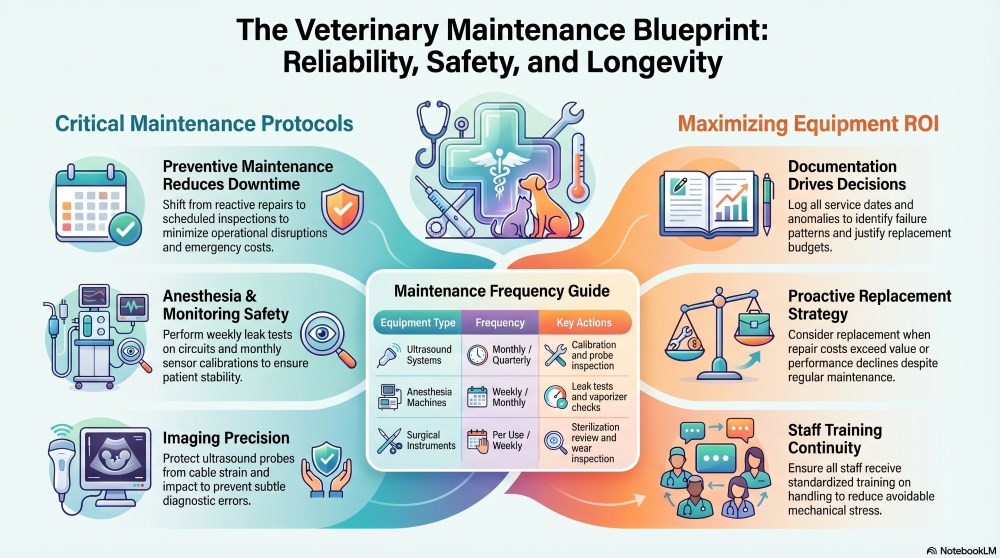
Preventive maintenance is the most effective way to extend equipment lifespan while minimizing operational disruption. It replaces reactive repair cycles with scheduled inspection, calibration, and servicing.
A well-designed preventive program focuses on early detection and correction of minor issues before they escalate. This is particularly important for precision-dependent systems such as ultrasound units and patient monitors.
🔍 Key Preventive Maintenance Activities
- Routine calibration of diagnostic and monitoring equipment
- Cleaning of internal and external components to prevent contamination
- Inspection of seals, connectors, and tubing for wear or leakage
- Software and firmware updates where applicable
- Functional testing to verify performance consistency
Each of these actions addresses a different failure pathway. Together, they create a controlled environment where equipment operates within expected tolerances.
Clinics that adopt preventive maintenance typically experience fewer emergency repairs and more predictable operating conditions.
Equipment Lifespan Is Driven by Usage Patterns, Environment, and Servicing Discipline
Veterinary equipment lifespan is not fixed. It varies significantly depending on how equipment is used, maintained, and stored.
High-frequency use accelerates wear, particularly in moving components and systems exposed to repeated sterilization or pressure changes. However, underutilized equipment can also degrade due to lack of routine cycling or improper storage.
Three primary factors determine longevity:
💪 Usage Intensity and Handling Consistency
Equipment subjected to heavy daily use requires more frequent inspection and servicing. Inconsistent handling — such as improper transport of portable ultrasound units — introduces avoidable stress.
🌡️ Environmental Conditions Within the Clinic
Temperature, humidity, and airborne contaminants all affect performance. Dust accumulation in ventilation systems or exposure to moisture can shorten the lifespan of sensitive electronics.
📋 Maintenance Adherence and Documentation
Clinics that follow documented maintenance schedules consistently outperform those that rely on ad hoc servicing. Recordkeeping ensures accountability and enables early identification of recurring issues.
Imaging Systems Require Precision-Focused Maintenance to Preserve Diagnostic Accuracy
Veterinary imaging equipment, particularly ultrasound systems, demands strict maintenance protocols to ensure reliable results. Small deviations in performance can lead to misinterpretation or repeat procedures.
📡 Ultrasound Probes and Transducers
Ultrasound probes are among the most sensitive components in a clinic. Damage to the probe face or internal wiring can degrade image quality without immediate detection.
Maintenance priorities include:
- Careful cleaning using approved solutions
- Inspection for cracks or signal inconsistencies
- Proper storage to avoid cable strain
- Avoidance of impact or pressure damage
🖥️ Imaging Consoles and Software Systems
Ultrasound consoles rely on both hardware and software stability. Regular updates and system checks prevent performance degradation and compatibility issues.
🎯 Calibration and Image Verification
Periodic testing ensures that imaging outputs remain consistent with expected standards. This is essential for longitudinal patient comparisons and accurate diagnostics.
Failure to maintain imaging systems properly often results in subtle errors rather than immediate breakdowns, making proactive care essential.
Anesthesia and Monitoring Equipment Maintenance Directly Impacts Patient Safety
Anesthesia machines and patient monitoring systems operate in high-risk clinical scenarios. Maintenance failures in these systems carry immediate consequences.
🫁 Anesthesia Delivery Systems
Gas flow accuracy, vaporizer function, and leak integrity must be verified regularly. Even minor deviations can affect dosage precision.
Routine checks should include:
- Leak testing of circuits and connections
- Verification of vaporizer output accuracy
- Inspection of hoses, valves, and seals
- Replacement of worn components
📊 Patient Monitoring Systems
Monitoring equipment must deliver consistent, real-time data. Sensor degradation or calibration drift can compromise readings.
Critical maintenance steps include:
- Sensor cleaning and replacement as needed
- Calibration of measurement systems
- Battery and power system checks
- Functional testing under simulated conditions
These systems require a higher maintenance standard due to their direct role in patient stability.
Dental and Surgical Equipment Longevity Depends on Sterilization and Handling Protocols
Dental and surgical tools are exposed to repeated sterilization cycles, which introduce thermal and mechanical stress. Improper handling during or after sterilization accelerates wear.
🔥 Sterilization Impact on Equipment
Autoclaving, while necessary, can degrade materials over time. Repeated exposure to heat and pressure affects seals, hinges, and cutting edges.
🤲 Instrument Handling Practices
Improper stacking, dropping, or forced articulation can damage tools. Even minor distortions can reduce effectiveness or safety.
✅ Maintenance Priorities for Surgical Tools
- Routine inspection for wear or deformation
- Sharpening or replacement of cutting instruments
- Lubrication of hinges and moving parts
- Proper drying and storage to prevent corrosion
Consistent handling protocols significantly extend the usable life of surgical equipment.
Maintenance Schedules Should Be Standardized Across All Equipment Categories
A standardized maintenance schedule ensures consistency and accountability across the clinic. It eliminates reliance on memory and reduces variability in servicing practices.
A structured schedule typically includes:
| Equipment Type | Maintenance Frequency | Key Actions |
|---|---|---|
| 🔬 Ultrasound Systems | Monthly / Quarterly | Calibration, probe inspection |
| 💉 Anesthesia Machines | Weekly / Monthly | Leak tests, vaporizer checks |
| 📊 Patient Monitors | Monthly | Sensor calibration, battery checks |
| 🦷 Dental Equipment | Weekly | Cleaning, inspection, lubrication |
| 🔧 Surgical Instruments | Per Use / Weekly | Sterilization review, wear inspection |
Schedules should be documented and integrated into daily operations. Assigning responsibility to specific team members improves adherence.
Vendor Support and Equipment Sourcing Influence Long-Term Maintenance Outcomes
The choice of equipment provider has a direct impact on maintenance efficiency and lifecycle performance. Vendors that offer structured support reduce operational uncertainty.
🧑🔧 Access to Technical Expertise
Reliable vendors provide guidance on maintenance procedures, troubleshooting, and servicing intervals. This reduces reliance on external repairs.
🏭 Availability of Replacement Parts
Delays in sourcing parts can extend downtime significantly. Vendors with strong supply chains enable faster recovery from issues.
⚙️ Equipment Design and Serviceability
Some systems are inherently easier to maintain due to modular design or accessible components. This reduces service complexity and cost.
BOMImed Supports Veterinary Clinics with Reliable Equipment and Long-Term Usability Considerations
BOMImed provides veterinary equipment solutions designed with durability, usability, and clinical performance in mind. Their product range includes imaging systems, anesthesia equipment, monitoring platforms, and specialized veterinary tools.
Clinics working with BOMImed benefit from:
- Equipment built for consistent clinical use
- Clear operational guidance aligned with veterinary workflows
- Access to systems designed for maintainability and reliability
- Solutions tailored to modern veterinary practice requirements
Maintenance Documentation Improves Accountability and Operational Decision-Making
Maintenance documentation transforms routine servicing into actionable operational data. It provides visibility into equipment performance trends and supports informed decision-making.
Effective documentation should include:
- Service dates and performed actions
- Identified issues and corrective measures
- Replacement history for parts and components
- Performance observations and anomalies
This information enables clinics to identify patterns such as recurring failures or declining performance. It also supports budgeting decisions by highlighting when replacement is more cost-effective than continued repair.
Staff Training Consistency Determines Maintenance Effectiveness Across the Clinic
Maintenance protocols are only as effective as the staff implementing them. Training ensures that procedures are performed correctly and consistently.
📚 Standardized Training Programs
All staff interacting with equipment should receive structured training. This includes both clinical use and basic maintenance responsibilities.
🤲 Handling and Usage Awareness
Improper use is a leading cause of equipment degradation. Training reduces avoidable damage and extends operational lifespan.
📌 Accountability and Oversight
Assigning responsibility for specific equipment categories improves consistency. Regular reviews reinforce adherence to protocols.
Training should be treated as an ongoing requirement rather than a one-time process.
Replacement Decisions Should Be Based on Performance Trends Rather Than Failure Events
Equipment replacement should be proactive rather than reactive. Waiting for failure often results in operational disruption and rushed purchasing decisions.
🚨 Indicators That Replacement Is Warranted
- Increasing frequency of repairs
- Declining performance despite maintenance
- Obsolete components or unsupported systems
- Rising maintenance costs relative to replacement cost
💰 Lifecycle Cost Evaluation
A structured evaluation compares ongoing maintenance expenses with the cost of new equipment. This ensures that decisions are financially and operationally justified.
⚠️ Operational Risk Considerations
Critical systems should be replaced before reliability becomes uncertain. This reduces the risk of failure during high-stakes clinical scenarios.
Common Maintenance Failures That Shorten Equipment Lifespan
Several recurring issues contribute to premature equipment degradation. These are often preventable with proper protocols.
- Inconsistent cleaning and contamination buildup
- Missed calibration intervals
- Improper storage conditions
- Overuse without scheduled servicing
- Lack of documentation and accountability
- Delayed response to minor issues
Addressing these failures requires a combination of process discipline and staff awareness.
Veterinary Equipment Maintenance Strategy Should Align with Clinic Growth and Service Expansion
As clinics expand services, equipment demands increase. Maintenance strategies must evolve accordingly to support higher volumes and more complex workflows.
📐 Scaling Maintenance Protocols
Increased equipment usage requires more frequent servicing and stricter scheduling. Maintenance capacity must grow with operational demands.
💡 Integrating New Technologies
New systems introduce additional maintenance requirements. Clinics must adapt protocols to accommodate different equipment types and technologies.
⚖️ Balancing Efficiency and Reliability
Growth often prioritizes throughput, but maintenance ensures sustainability. Clinics must balance both to avoid long-term operational strain.
Frequently Asked Questions: Veterinary Equipment Maintenance