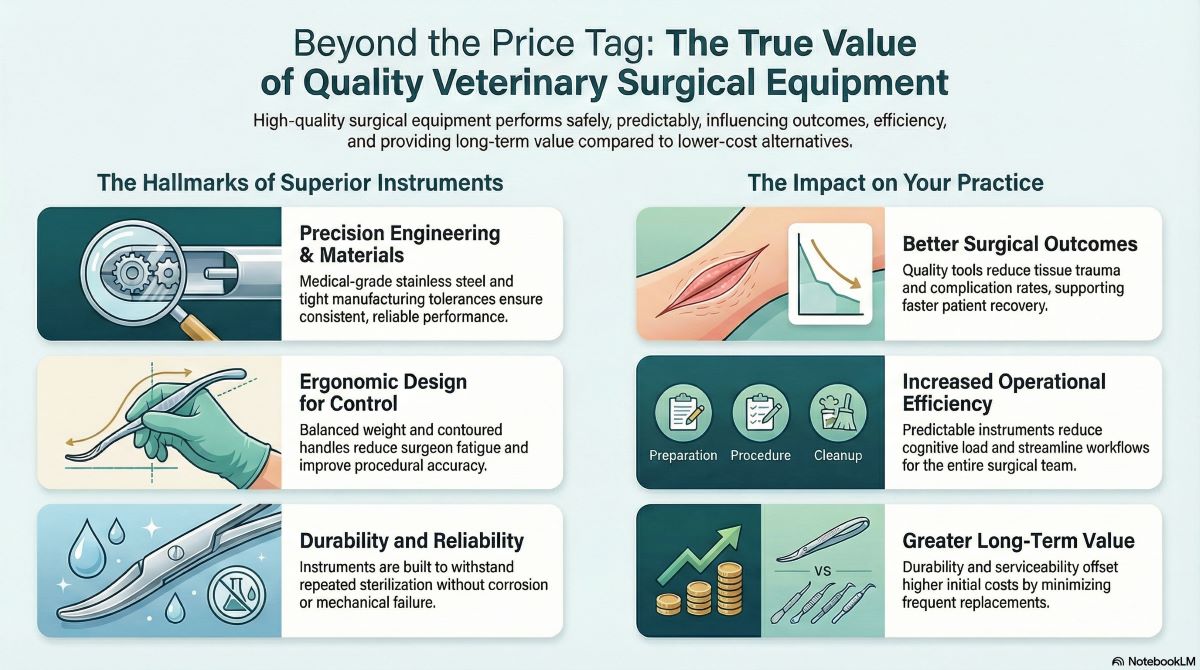








High-quality veterinary surgical equipment is defined by its ability to perform consistently, safely, and predictably across a wide range of procedures and species. It supports surgical accuracy, minimizes intraoperative risk, and withstands repeated sterilization without degradation. Equipment quality directly influences surgical outcomes, workflow efficiency, and the long-term operational health of a practice.
Veterinary surgery equipment must balance precision engineering with practical usability. Instruments that are technically advanced but difficult to maintain or unreliable under routine use fail to meet professional standards. True quality is measured over years of clinical use, not at the point of purchase.
The Relationship Between Equipment Quality and Surgical Outcomes
Surgical outcomes are shaped as much by equipment performance as by clinician skill. Poorly manufactured instruments compromise tactile feedback, introduce variability, and increase the likelihood of tissue trauma. Over time, these small inconsistencies accumulate into higher complication rates and longer recovery periods.
High-quality veterinary surgical equipment supports controlled movement, clean tissue interaction, and predictable performance. This consistency allows surgeons to focus fully on technique rather than compensating for instrument limitations during critical moments.
Veterinary Surgical Equipment Material Selection and Metallurgical Integrity
Material quality determines durability, corrosion resistance, and instrument longevity. Most professional veterinary surgical equipment is manufactured from medical-grade stainless steel alloys designed to tolerate repeated sterilization cycles. Inferior alloys may appear adequate initially but degrade through pitting, discoloration, or loss of structural integrity.
Metallurgical consistency matters across entire instrument sets. Variations in hardness or alloy composition lead to uneven wear, misalignment, and compromised cutting performance. High-quality manufacturers maintain strict material standards across every component to ensure uniform performance.
Precision Manufacturing and Tolerance Control
Precision manufacturing distinguishes professional-grade veterinary surgical equipment from lower-tier alternatives. Tight tolerances ensure that hinges align correctly, blades meet evenly, and locking mechanisms engage smoothly. Even minor deviations in manufacturing tolerances can result in excessive play or binding during use.
Consistent machining also affects instrument balance and ergonomics. Well-manufactured instruments feel stable and predictable in the hand, supporting precise movement during delicate surgical procedures.
Surgical Veterinary Equipment Instrument Design and Functional Ergonomics
Design influences both surgical precision and surgeon fatigue. Veterinary surgical equipment must accommodate prolonged use while maintaining control and comfort. Poor ergonomics contribute to hand strain, reduced dexterity, and diminished accuracy over time.
Balanced weight distribution, properly contoured handles, and smooth joint movement allow surgeons to maintain fine motor control. High-quality equipment integrates ergonomic considerations without sacrificing strength or durability.
Durability Under Repeated Sterilization
Veterinary surgery equipment undergoes frequent sterilization, often multiple times per day. High-quality instruments are engineered to withstand repeated exposure to heat, pressure, and chemical agents without warping or corrosion. Durability under sterilization is not optional in professional environments.
Instruments that degrade under routine sterilization compromise both safety and cost efficiency. Replacing equipment prematurely increases operational expenses and disrupts surgical consistency.
Cutting Performance and Edge Retention
Cutting instruments such as scissors, scalpels, and osteotomes must maintain sharpness over extended use. High-quality veterinary surgical equipment features hardened cutting edges designed to resist dulling while allowing for professional resharpening when needed.
Edge retention affects tissue handling and surgical efficiency. Dull instruments increase tissue trauma, prolong procedure time, and elevate the risk of postoperative complications.
Joint Integrity and Mechanical Reliability
Instruments with joints, hinges, or locking mechanisms must operate smoothly without lateral movement. Mechanical reliability ensures consistent force application and predictable response during use. Poor joint construction leads to instability and increases the likelihood of instrument failure during surgery.
High-quality veterinary surgery equipment is engineered to maintain joint alignment and tension across years of use. This reliability supports precision and reduces maintenance demands.
Surgical Instrument Balance and Control
Instrument balance influences surgical control at a subconscious level. Well-balanced veterinary surgical equipment allows the surgeon to work intuitively, reducing compensatory movements and fatigue. Poor balance forces constant adjustment and undermines fine motor precision.
Balance is particularly critical during microsurgical and soft tissue procedures where minimal movement can have significant consequences. High-quality equipment maintains consistent balance across instrument sets.
Compatibility with Veterinary Surgical Specialties
Veterinary surgery spans multiple specialties, including soft tissue, orthopedics, dentistry, and ophthalmology. High-quality veterinary surgical equipment supports specialization without forcing compromise. Modular instrument systems allow practices to expand capabilities as clinical offerings grow.
Equipment designed for specialty compatibility reduces redundancy and improves inventory efficiency. This adaptability supports both general practices and referral-level facilities.
Sterilization Compatibility and Workflow Integration
Sterilization compatibility affects daily workflow efficiency. Instruments must integrate seamlessly with existing autoclaves, ultrasonic cleaners, and sterilization protocols. Equipment that requires special handling introduces inefficiencies and increases the risk of contamination.
High-quality veterinary surgical equipment is designed for standard sterilization workflows, allowing staff to process instruments quickly and reliably without additional training or equipment.
Safety Features and Risk Mitigation
Safety features protect both patients and staff. Secure locking mechanisms, insulated handles, and smooth surface finishes reduce the risk of accidental injury. Veterinary surgery equipment should minimize sharp edges outside functional areas and eliminate unnecessary protrusions.
Risk mitigation also includes design choices that prevent instrument failure during use. High-quality equipment undergoes rigorous testing to ensure structural integrity under expected surgical forces.
Standardization Across Instrument Sets
Consistency across instrument sets improves surgical efficiency and training. When instruments behave predictably, staff members develop muscle memory and confidence. Mixing equipment of varying quality introduces inconsistency and increases the likelihood of error.
High-quality veterinary surgical equipment manufacturers maintain uniform standards across entire product lines. This standardization simplifies inventory management and staff onboarding.
Evaluating a Veterinary Surgery Equipment List
A comprehensive veterinary surgery equipment list should reflect the scope of procedures performed. Essential categories include cutting instruments, grasping instruments, retractors, needle holders, suction devices, and specialty tools. Quality matters more than quantity when building these lists.
Selecting fewer high-quality instruments often delivers better outcomes than purchasing large sets of inconsistent quality. Strategic selection reduces clutter and improves surgical focus.
Maintenance, Repair, and Serviceability
Even the highest-quality veterinary surgical equipment requires maintenance. Instruments designed for professional use support sharpening, refurbishment, and component replacement. Serviceability extends equipment lifespan and preserves performance.
Equipment that cannot be serviced effectively becomes disposable, increasing long-term costs. High-quality instruments are built with maintenance in mind, supporting sustainable clinical operations.
Vendor Transparency and Manufacturing Accountability
Vendor transparency reflects confidence in product quality. Reputable suppliers provide clear information about materials, manufacturing processes, and quality control standards. Lack of transparency often signals inconsistent manufacturing practices.
Manufacturing accountability also includes traceability and consistency across production batches. High-quality veterinary surgical equipment maintains predictable performance regardless of production date.
Regulatory Alignment and Institutional Acceptance
Veterinary practices often interact with referral centers, research institutions, and regulatory bodies. Equipment that aligns with institutional expectations supports professional credibility and collaboration. While veterinary equipment regulations differ from human medicine, professional standards still apply.
Alignment with accepted veterinary surgical norms ensures equipment remains suitable as practices evolve or expand into advanced clinical services.
Cost Versus Long-Term Value
Purchase price alone does not define value. High-quality veterinary surgical equipment often carries a higher upfront cost but delivers superior longevity and performance. Over time, reduced replacement frequency and lower maintenance costs offset initial investment.
Low-cost equipment frequently leads to higher long-term expenses due to failure, replacement, and compromised surgical efficiency. Value should be assessed across the full lifecycle of the equipment.
Impact on Training and Staff Performance
Equipment quality influences training effectiveness. Consistent, reliable instruments allow trainees to focus on technique rather than compensating for equipment limitations. This accelerates skill development and reduces frustration.
High-quality veterinary surgery equipment supports standardized training protocols and improves confidence across surgical teams.
Inventory Management and Scalability
Practices evolve over time, expanding services and case complexity. Veterinary surgical equipment should support scalable growth rather than constrain it. Modular systems and standardized instrument families facilitate gradual expansion.
High-quality equipment simplifies inventory management by reducing variability and replacement frequency. This stability supports long-term operational planning.
Environmental Considerations and Sustainability
Durable veterinary surgical equipment contributes to environmental sustainability by reducing waste. Instruments that withstand repeated sterilization and refurbishment generate less disposable waste over time. Sustainability increasingly aligns with operational efficiency.
Choosing high-quality equipment supports responsible resource use without compromising clinical performance.
Assessing Surgical Equipment Veterinary Suppliers
Supplier reliability matters as much as product quality. Consistent availability, responsive support, and dependable fulfillment protect surgical scheduling and patient care. Unreliable suppliers introduce operational risk.
High-quality veterinary surgical equipment suppliers build long-term partnerships with practices, supporting growth and continuity.
Technology Integration and Modern Surgical Needs
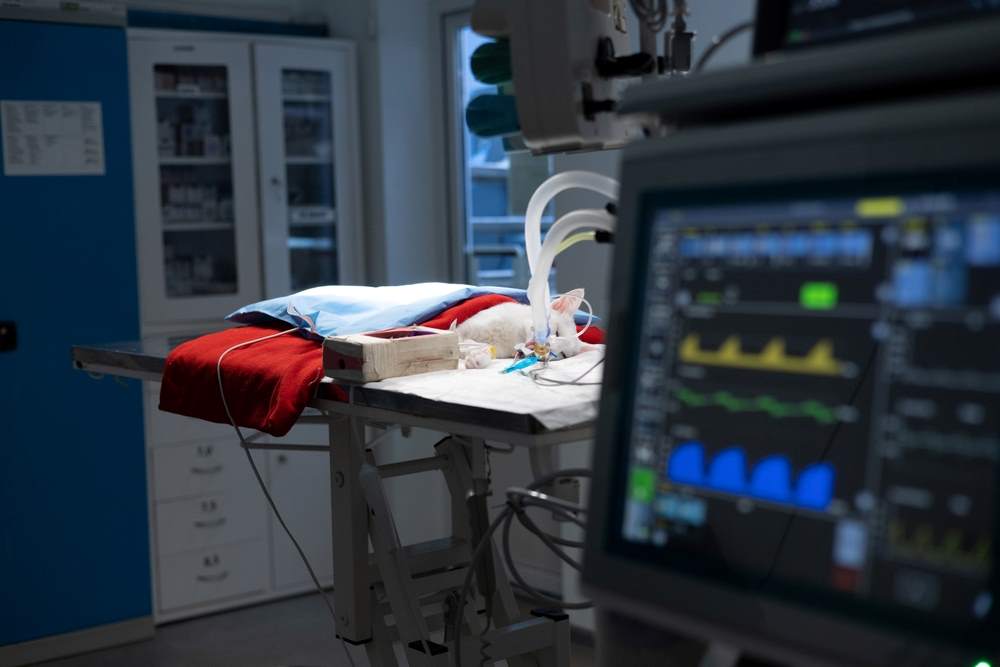
Modern veterinary surgery increasingly integrates advanced imaging, monitoring, and minimally invasive techniques. Equipment compatibility with these technologies is essential. High-quality surgical instruments support integration without requiring frequent replacement.
Technology-ready equipment ensures practices remain competitive as surgical standards evolve.
Balancing Standardization with Customization
While standardization improves consistency, some customization is inevitable across practices. High-quality veterinary surgical equipment accommodates customization without sacrificing quality. Interchangeable components and adaptable designs provide flexibility.
This balance allows practices to tailor equipment to specific needs while maintaining consistent performance standards.
Risk of Equipment Downtime
Equipment failure during surgery creates immediate risk. High-quality veterinary surgical equipment minimizes downtime through reliable construction and predictable performance. Preventing failure is a core measure of quality.
Downtime also disrupts scheduling and erodes client trust. Reliability protects both patient safety and practice reputation.
Building a Long-Term Equipment Strategy
Choosing veterinary surgical equipment should align with long-term clinical goals rather than short-term cost savings. Strategic planning considers procedure mix, staff expertise, and growth trajectory. Equipment decisions made today influence surgical capabilities for years.
High-quality equipment supports adaptability, consistency, and professional credibility as practices evolve.
Consistency Across Multi-Room and Multi-Surgeon Practices
As veterinary practices expand, equipment consistency becomes increasingly important. When multiple surgical suites or surgeons operate within the same facility, standardized veterinary surgical equipment reduces variability in outcomes and workflow. Consistency allows surgeons to move between rooms without adjusting technique or expectations.
Uniform equipment also simplifies staff coordination. Surgical assistants, technicians, and sterilization teams work more efficiently when instrument sets behave predictably. This operational alignment reduces setup time, minimizes errors, and supports smoother case transitions throughout the day.
Equipment Performance Across Species and Sizes
Veterinary surgery equipment must perform reliably across a wide range of patient sizes and anatomies. Instruments that work well for small companion animals may not scale effectively for larger breeds or exotic species. High-quality equipment maintains precision and control regardless of patient variability.
This adaptability reduces the need for excessive duplication of tools. Practices benefit from versatile instruments that retain performance across diverse surgical scenarios without compromising safety or precision.
Managing Wear Patterns and Predictable Degradation
All surgical instruments experience wear over time, but high-quality veterinary surgical equipment degrades in predictable and manageable ways. Controlled wear allows for proactive maintenance, such as scheduled sharpening or hinge adjustment, before performance is compromised. Unpredictable degradation increases the risk of sudden failure.
Predictable wear patterns also support budgeting and inventory planning. Practices can plan maintenance cycles rather than reacting to unexpected instrument loss or emergency replacements.
Reducing Cognitive Load During Surgery
Surgical performance depends on focus and decision-making under pressure. Equipment that behaves inconsistently adds unnecessary cognitive load, forcing surgeons to compensate for stiffness, imbalance, or unreliable locking mechanisms. High-quality veterinary surgical equipment reduces this mental burden.
When instruments respond intuitively, surgeons can dedicate full attention to anatomy, technique, and patient monitoring. This clarity improves precision and reduces fatigue during complex or prolonged procedures.
Instrument Identification and Organization
Clear identification and organization of surgical equipment improves efficiency and safety. High-quality veterinary surgical equipment often supports standardized labeling, tray layouts, and visual differentiation. These features reduce setup errors and speed instrument selection during procedures.
Well-organized equipment also supports training environments. New staff and rotating clinicians adapt more quickly when instrument sets are logically arranged and consistently presented.
Impact on Referral and Advanced Case Acceptance
Practices equipped with high-quality veterinary surgical equipment are better positioned to accept complex or referral-level cases. Advanced procedures require confidence in instrument performance under demanding conditions. Equipment limitations can restrict case acceptance and growth opportunities.
Reliable equipment expands clinical capability without requiring constant upgrades. This stability allows practices to build reputations for surgical competence and reliability over time.
Instrument Weight and Fatigue Management
Instrument weight plays a subtle but important role in surgical endurance. Equipment that is excessively heavy contributes to hand fatigue, while overly light instruments may sacrifice control. High-quality veterinary surgical equipment achieves balanced weight that supports precision without strain.
Fatigue management is particularly important in high-volume surgical settings. Ergonomically balanced instruments help maintain performance consistency from the first procedure of the day to the last.
Quality Assurance During Procurement
Evaluating veterinary surgery equipment requires more than visual inspection. High-quality instruments demonstrate smooth joint movement, precise alignment, and consistent resistance across multiple samples. Variability between identical instruments is a warning sign of inconsistent manufacturing.
Procurement decisions should consider repeatability across shipments. Equipment that performs well once but inconsistently over time introduces operational risk.
Supporting Practice Reputation and Client Trust
While clients may never see surgical instruments directly, outcomes reflect equipment quality. Consistent healing, reduced complications, and efficient procedures reinforce trust in the practice. Veterinary surgical equipment plays an indirect but meaningful role in client confidence.
Practices that invest in quality infrastructure signal professionalism and long-term commitment to care. This perception supports client retention and referral growth.
Aligning Equipment Choices With Clinical Philosophy
Every practice operates with a clinical philosophy that prioritizes certain values, whether efficiency, specialization, or comprehensive care. Veterinary surgical equipment should align with that philosophy rather than dictate it. High-quality equipment adapts to clinical intent instead of constraining it.
Equipment choices that reflect long-term vision support coherence across services, staff training, and patient care standards.
Veterinary Surgical Equipment – Frequently Asked Questions
What defines high-quality veterinary surgical equipment?
High-quality veterinary surgical equipment delivers consistent performance, precise control, durable construction, and compatibility with routine sterilization. It maintains reliability over years of clinical use.
How important is material quality in veterinary surgery equipment?
Material quality directly affects durability, corrosion resistance, and performance consistency. Medical-grade alloys ensure instruments tolerate repeated sterilization without degradation.
Is it better to buy complete surgical sets or individual instruments?
Selecting individual high-quality instruments often delivers better outcomes than purchasing large, inconsistent sets. Strategic selection improves performance and reduces unnecessary inventory.
How does equipment quality affect surgical efficiency?
Reliable instruments reduce procedural delays, improve tactile feedback, and allow surgeons to work more confidently. This efficiency benefits both patient outcomes and workflow.
What should be included in a basic veterinary surgery equipment list?
Core categories include cutting instruments, grasping tools, needle holders, retractors, suction devices, and specialty instruments appropriate to the procedures performed.
How often should veterinary surgical equipment be replaced?
High-quality equipment lasts many years with proper maintenance. Replacement is typically driven by wear beyond serviceability rather than predetermined timelines.
Does higher cost always indicate better quality?
Higher cost often reflects superior materials and manufacturing but does not guarantee quality. Evaluating construction, serviceability, and consistency provides a clearer assessment.